
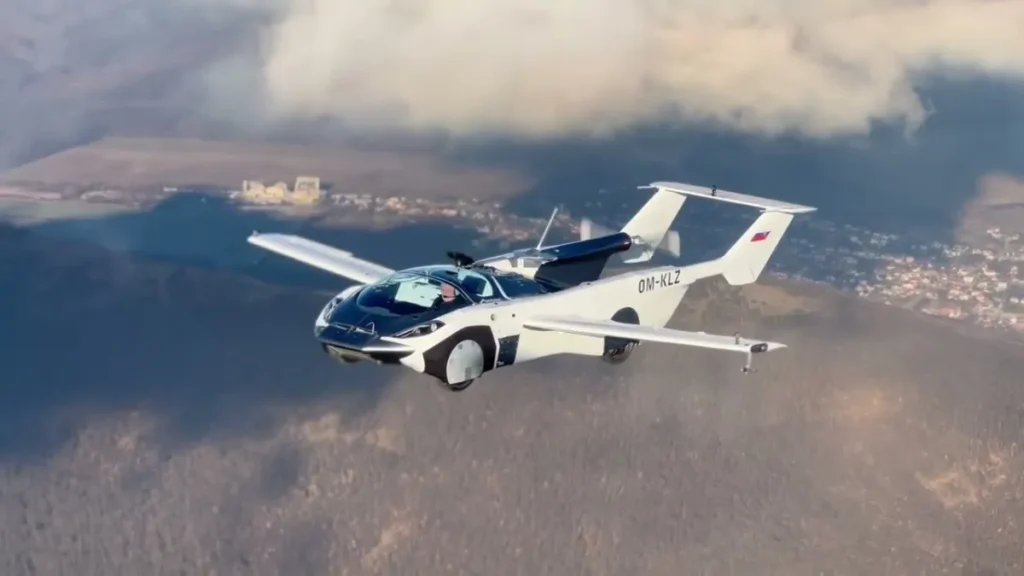
The automotive industry is standing at the edge of a technological revolution. For over a century, cars have remained largely earthbound machines designed to move us across roads and highways. Today, however, advancements in artificial intelligence, electric propulsion, autonomous navigation, and aerospace engineering are transforming the concept of mobility itself. Flying cars, once considered science fiction, are rapidly becoming a serious reality.
As companies race to develop electric vertical take-off and landing vehicles (eVTOLs), society is beginning to ask an important question: if our cars can fly, are we now becoming pilots? And perhaps more importantly for the insurance industry, how do we insure the car of the future?
The Rise of the Flying Car
Several technology and aviation companies are investing billions into flying vehicle innovation. These futuristic machines are designed to reduce traffic congestion, shorten travel times, and create entirely new transportation ecosystems within urban environments. Unlike traditional aircraft, many flying cars are intended to operate autonomously or semi-autonomously, making them accessible to ordinary consumers rather than trained pilots.
The vision is compelling. Imagine commuting from Johannesburg to Pretoria in under twenty minutes while avoiding traffic completely. Emergency services could reach accident scenes faster, logistics companies could deliver goods more efficiently, and urban mobility could fundamentally change forever.
Yet while engineers focus on propulsion systems and flight stability, insurers must confront a different challenge: risk.
Traditional Car Insurance Meets Aviation Risk
Current motor insurance models are built around road-related risks. Insurers evaluate factors such as:
- Driver behavior
- Vehicle theft
- Road accidents
- Weather damage
- Repair costs
- Third-party liability
Flying cars introduce an entirely new category of exposure. Suddenly, insurers are not only assessing road safety but also airspace risk, aviation regulations, cyber threats, and software reliability.
A flying vehicle accident could involve:
- Mid-air collisions
- System or battery failures
- GPS interference
- Autonomous software malfunction
- Falling debris causing third-party damage
- Passenger injury during take-off or landing
This means the future insurer may need to combine elements of both motor insurance and aviation insurance into a hybrid model.
Will Drivers Need Pilot Licenses?
One of the most debated issues is whether future flying car owners will require aviation certification. If flying cars become fully autonomous, regulators may minimize the need for traditional pilot training. However, if manual override systems remain available, some level of aviation competency could become mandatory.
This creates fascinating implications for underwriting.
Today, insurers reward safe driving history with lower premiums. Tomorrow, insurers may evaluate:
- Flight training certifications
- Air navigation competence
- Autonomous system usage patterns
- Compliance with urban air traffic rules
- Software update history
The line between motorist and pilot may become increasingly blurred.
The Role of Artificial Intelligence in Insurance
Artificial intelligence will likely become central to insuring flying cars. Future insurers may use real-time data streams from vehicles to assess risk continuously rather than relying solely on annual policy reviews.
Sensors could monitor:
- Flight altitude
- Route efficiency
- Weather conditions
- Mechanical system health
- Pilot or passenger behavior
- Autonomous decision-making accuracy
Insurance may evolve into a dynamic pricing model where premiums adjust instantly based on operational risk. Safer flight behavior could reduce costs immediately, while risky actions could trigger higher premiums or automatic grounding alerts.
In many ways, the insurer of the future may operate more like an aviation control center than a traditional underwriting office.
Cybersecurity: The New Accident Risk
Unlike conventional cars, flying vehicles will depend heavily on software, connectivity, and cloud infrastructure. This introduces a major concern: cybercrime.
If hackers gain access to a flying car’s navigation system, the consequences could be catastrophic. Cybersecurity coverage may therefore become a core component of future mobility insurance policies.
Insurers may need to provide protection against:
- System hacking
- GPS spoofing
- Data theft
- Software corruption
- Autonomous navigation interference
As vehicles become smarter, insurance products must become smarter too.
Infrastructure and Legal Challenges
Flying cars cannot operate safely without a supporting ecosystem. Governments will need to establish:
- Urban air traffic regulations
- Designated landing zones
- Licensing frameworks
- Emergency response protocols
- Liability laws
Insurance companies will play a critical role in shaping these regulations because underwriting data often influences safety standards.
Questions will emerge such as:
- Who is liable during autonomous flight failure?
- Does responsibility lie with the owner, software developer, or manufacturer?
- How are cross-border airspace incidents handled?
- What happens if an AI system makes a fatal navigation decision?
These are not just technological questions — they are legal and ethical ones.
The Future of Insurance Professionals
The rise of flying cars may fundamentally redefine insurance careers. Underwriters, brokers, and risk managers may require knowledge in:
- Aviation law
- Artificial intelligence
- Aerospace engineering
- Cybersecurity
- Autonomous systems
Insurance professionals may no longer simply insure vehicles — they may insure integrated mobility ecosystems operating in both terrestrial and aerial environments.
In this future, the insurance broker could resemble a technology consultant as much as a financial advisor.
Conclusion
Flying cars represent far more than a transportation innovation. They symbolize the merging of automotive engineering, aviation, artificial intelligence, and digital infrastructure into a single ecosystem. As society moves closer to this reality, the insurance industry faces one of the greatest transformations in its history.
The question is no longer whether flying cars will exist. The real question is whether insurers, regulators, and consumers are ready for a world where mobility happens both on the road and in the sky.
Perhaps the title says it best: are we now pilots, insuring the car of the future?
The answer may very well be yes.